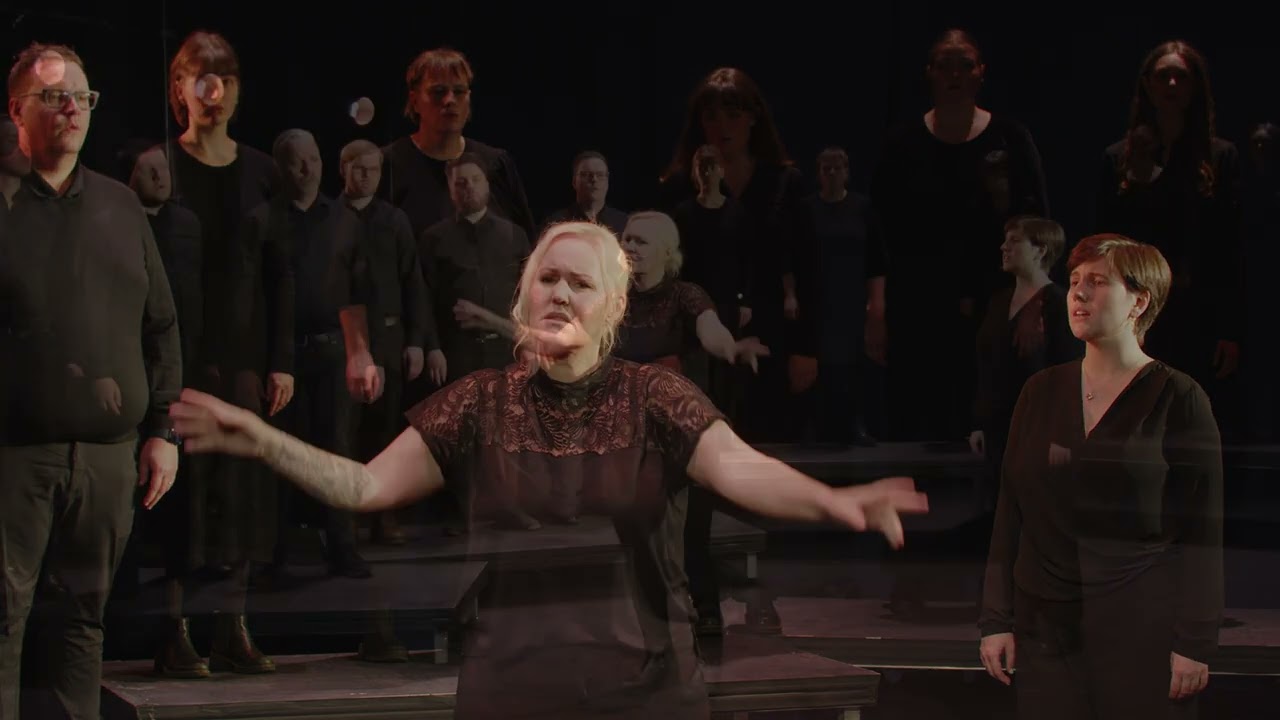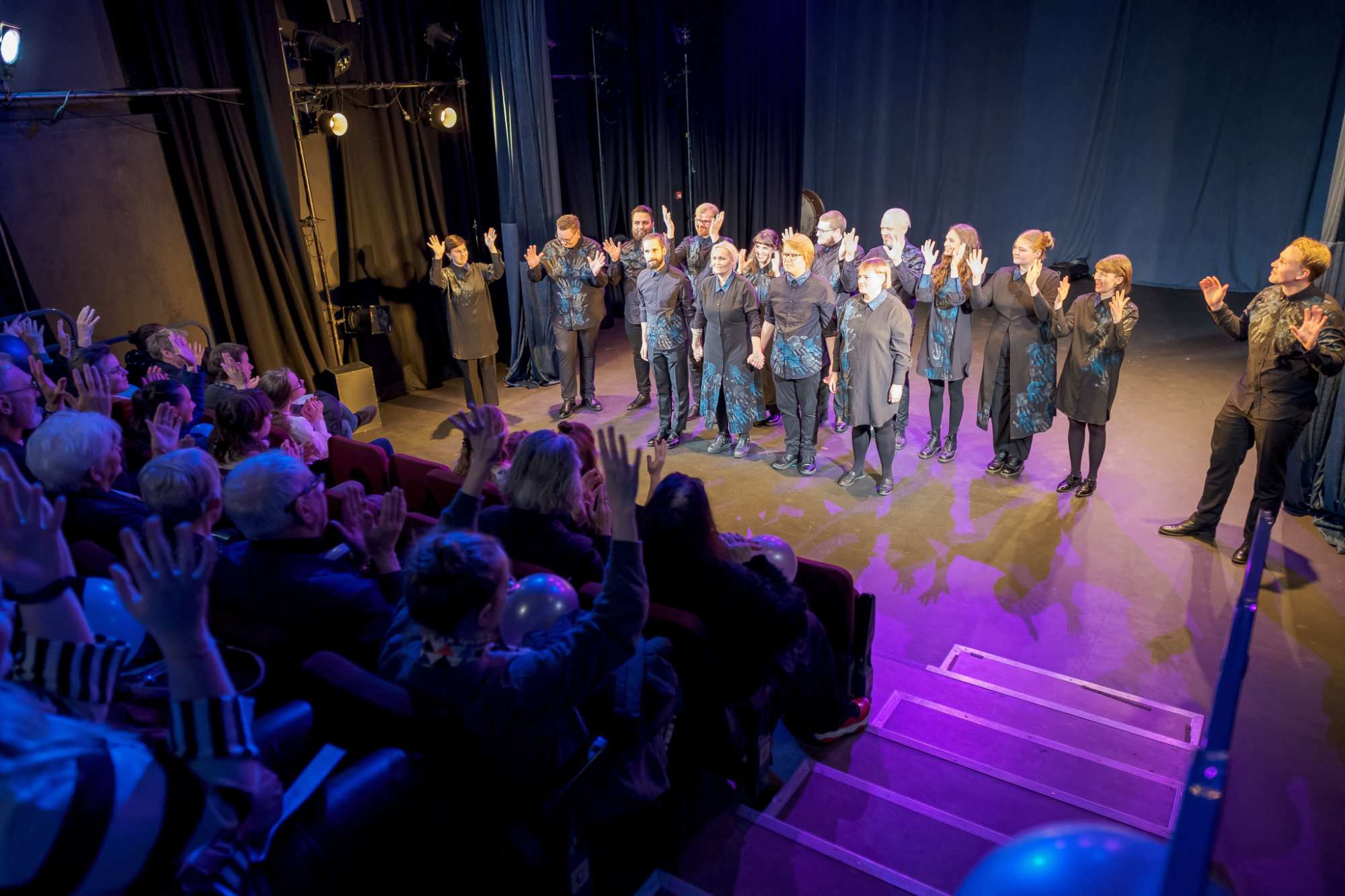
A new phase of our project, Look at the Music, is now done! In this two year project, we have researched and experimented with how to make music that both Deaf and hearing people can enjoy, with an emphasis on the beauty and poetry of sign-languages. We have created an epic concert that is not only accessible to deaf people, but also more enjoyable for everyone. We went on a tour of Nordic cities, Torshavn, Copenhagen and Oslo, where we performed our concert for all to see, and workshops for Sign-Language speakers. Our journey ended in Reykjavík with a final epic concert.
You can watch our new music videos on youtube, purchase our score-book from this website, or read on to know a bit more about what we did.

Usually, hearing people compose music and text and then have it interpreted into a sign-language. We worked with Deaf artists and poets, who composed all of our texts, in Icelandic and American sign-language. Stefan Sand then proceeded to compose music that would match the beauty of the sign-language. In the videos, you can see each piece performed by its composer.

We wanted everyone to enjoy our concert. We translated the sign-language lyrics into English and Icelandic to make them accessible to our hearing audience. For the deaf and hard-of-hearing, we came up with ways to feel sound vibrations through other senses, and put special emphasis on lights, choreography and set design.
Several of our pieces were based on an art-form specific to sign-languages. Visual Vernacular (VV) is a way of telling stories without using any sign (sign-language word). The storyteller usually performs the story alone and impersonates every character in turn, sometimes even taking the role of inanimate objects or animals. VV uses the body language of sign-languages and a lot of conventions from films; but no words. Which means people all over the world can understand it!

This project has three ambitions: making people aware of the beauty and richness of sign-language culture: it is a vibrant international scene that is little known and worth exploring giving Deaf people more power to participate in music creation: placing Deaf artists in center-stage, to affirm their legitimacy to create art for all to enjoy finding new ways to create and enjoy music: by taking on new points of view, by taking new constraints into account, we can actually renew artistic inspiration and make new creations that are more fun for all